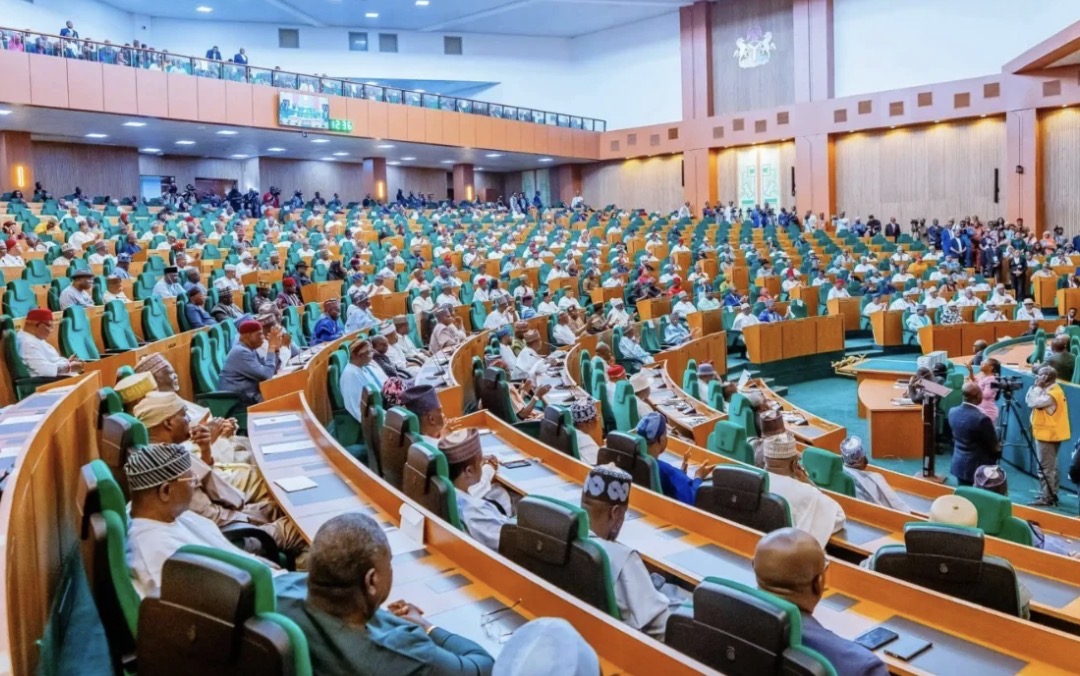
Officials from the Independent National Electoral Commission (INEC) and the Nigerian National Petroleum Company Limited (NPCL) will be questioned by the House of Representatives Public Accounts Committee regarding suspected financial violations totalling more than N802.19 billion.
The claims are included in the reports of the Auditor-General of the Federation, or AuGF, for the fiscal years 2021, 2022, and 2023. These reports raised concerns about government agencies’ compliance with financial regulations, revenue management, payments, and procurement practices.
Under Sections 85, 88, and 89 of the Constitution as well as Order 20, Rule 6 of the House Rules, the committee, which is presided over by Bamidele Salam, the lawmaker representing Ede North/Ede South/Ejigbo/Egbedore Federal Constituency of Osun State, is authorised to review public accounts and look into matters pertaining to revenue losses, non-remittance of statutory funds, and violations of financial regulations.
The audit reports revealed a number of concerns about NNPCL in its 2021, 2022, and 2023 audits, according to a committee member who spoke on condition of anonymity because he was not permitted to talk publicly. He claims that INEC will also have to explain the problems mentioned in the AuGF’s 2022 and 2023 reports.
A N3.75 billion shortfall from the sale of petroleum products, N82.95 billion in illegal withdrawals from Federation revenue, and N83.66 billion purportedly warehoused from miscellaneous revenue in a sinking fund account are among the anomalies apparently brought to the attention of the Auditor-General.
It is anticipated that the committee would request explanations and supporting documentation from NNPCL concerning the transactions and audit questions.
Regarding the accusations made against INEC, the congressman stated that the electoral authority had “many questions to answer” regarding contractor payments, procurement procedures, and the non-remittance of statutory deductions.
He pointed out that the enquiries addressed transactions that took place while Prof. Mahmood Yakubu, a former INEC Chairman who has since been named an ambassador, was in office.
“There are questions to be asked on money spent starting from the 2019 general election,” the senator said, declining to reveal specific accusations against the commission.
The Hydrocarbon Pollution Remediation Project, or HYPREP, has been given seven days by the House Public Accounts Committee to respond to audit questions pertaining to more than N400 billion.
Following the agency’s claimed failure to accept the committee’s four prior invitations, the ultimatum was given during a public hearing.
Salam characterised the most recent invitation as a last warning, instructing HYPREP’s Program Coordinator to appear before the committee by October 12, 2026, failing which the House will take additional action.
The chairman of the Ogoni Remediation Trust Fund’s board of trustees was also invited by the committee to discuss matters related to the audit findings.
HYPREP has been accused of failing to submit audited accounts to the Auditor-General’s Office between 2017 and 2021, of failing to deduct statutory taxes from contracts involving $2.1 million due to alleged irregular awards, of paying N986 million for consulting services without proof of execution, of spending N315 million on training, and of spending N7.2 billion on contracts that were allegedly poorly executed.
The auditors also questioned N31.8 million paid to outside solicitors without the Attorney-General of the Federation’s consent, N268 million paid without a pre-payment audit, and N32 million in statutory taxes that were not subtracted.
In a similar event, the Human Rights Writers Association of Nigeria, or HURIWA, has warned against using future crude production to address current financial difficulties and has urged full disclosure of the rumoured N11.2 trillion oil-backed loans.
The projected commitment of over 340 million barrels of future crude to service three loans raises severe questions about transparency, fiscal responsibility, and the interests of future generations, according to a statement released on Sunday by HURIWA National Coordinator Emmanuel Onwubiko.
According to Onwubiko, “Nigerians have every right to demand to know whether the country is receiving fair value and what future generations are being asked to surrender.”
“This is the danger Nigerians must confront,” he continued, comparing the arrangement to a father selling family assets to satisfy urgent demands.
Onwubiko emphasised that the size of the disclosed obligations necessitates public examination, even though he noted that borrowing against future oil production is not illegal.
He called on the Federal Government and the NNPCL to reveal the specifics of the financing agreements and provide an explanation of how the money was used, particularly whether it was put into initiatives that could produce long-term financial gains.