
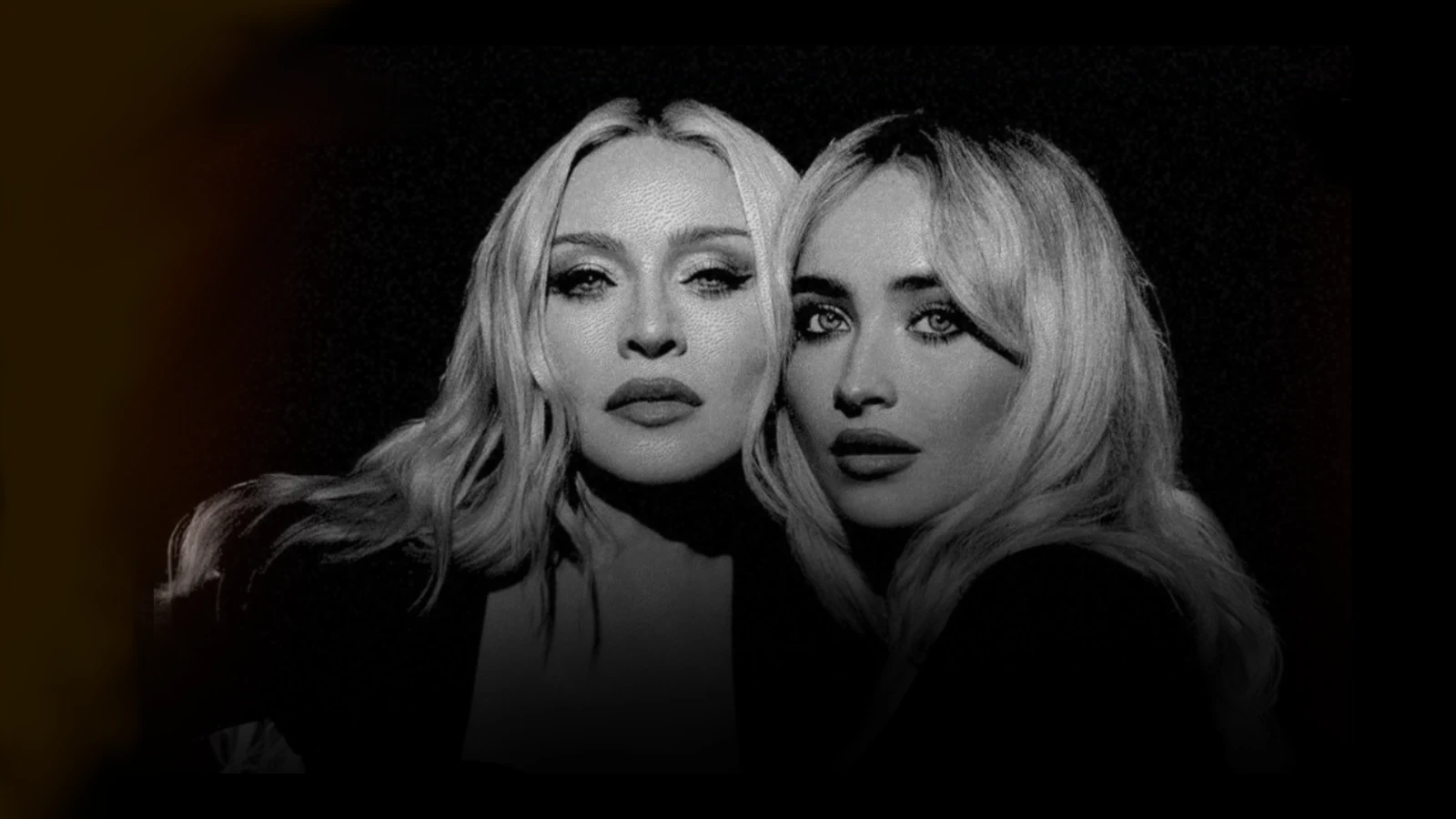
The 2026 pop conversation has been dominated by widespread discussion around the alleged Madonna and Sabrina Carpenter collaboration titled “Bring Your Love.” Framed across social media and fan discourse as a bridge between classic dance-pop and modern streaming-era pop, the release has been described as one of the most talked-about pop moments of the year.
Rather than just functioning as a single, the project has been positioned as a symbolic connection between two generations of pop performance styles—Madonna’s legacy-driven dance identity and Sabrina Carpenter’s current mainstream pop dominance.
Coachella 2026 Surprise Moment and Song Reveal
The earliest public attention around “Bring Your Love” came from Sabrina Carpenter’s Coachella Weekend 2 headline performance in April 2026, where Madonna reportedly made a surprise appearance.
The moment gained viral traction after both artists performed a short medley of Madonna classics before previewing a then-unnamed new track that would later be identified as “Bring Your Love.”
Key live moment breakdown
| Element | Details |
|---|---|
| Event | Coachella 2026 Weekend 2 |
| Performer | Sabrina Carpenter (headliner) |
| Guest Appearance | Madonna (surprise guest) |
| Songs performed | “Vogue,” “Like a Prayer,” preview of new track |
| Audience reaction | Viral social media coverage and strong online engagement |
| Impact | Sparked global speculation about collaboration |
The live version leaned heavily into house and disco-inspired production, matching Coachella’s high-energy atmosphere and reinforcing Madonna’s long-standing dance-floor identity.
Official Release and Project Direction
Following the festival performance, the studio version of “Bring Your Love” was officially released on April 30, 2026, and widely reported as the lead single from Madonna’s rumored project:
Confessions on a Dance Floor: Part II (expected July 3, 2026)
The rollout reinforced expectations that Madonna was returning to her most iconic sonic space: electronic dance-pop with emotional and rhythmic focus.
Sound, Production, and Artistic Direction
“Bring Your Love” is widely described as a modern dance-pop record influenced by late 90s house and early 2000s club music. The production reportedly involves Madonna and long-time collaborator Stuart Price, known for shaping her earlier dance era.
Sound profile overview
| Aspect | Description |
|---|---|
| Genre | Dance-pop, house, electronic |
| Tempo | Mid-to-upbeat club rhythm |
| Production style | Repetitive hooks, layered synths, strong basslines |
| Emotional tone | Empowerment, resilience, confidence |
| Vocal dynamic | Madonna (commanding), Sabrina (light melodic contrast) |
The chorus centers around a confident hook:
“Bring your love ’cause you cannot shake me…”
The blend of voices is frequently described as intentional rather than forced—Madonna anchoring the track with structure and authority, while Sabrina adds a more youthful melodic softness suited for streaming audiences.
Madonna: Career Background and Evolution
Madonna Louise Ciccone, born August 16, 1958, in Bay City, Michigan, remains one of the most influential figures in modern pop history.
Her journey from early struggles in New York City to global superstardom is often cited as one of the defining transformation stories in entertainment.
Career timeline summary
| Year | Milestone |
|---|---|
| 1958 | Born in Michigan |
| 1978 | Moves to New York City to pursue dance |
| Early 1980s | Signs with Sire Records |
| 1983 | Releases debut album Madonna |
| 1984 | Breakthrough with Like a Virgin |
| 2000s–present | Multiple reinvention eras in pop, electronic, and dance music |
Madonna’s career has consistently been defined by reinvention, controversy, and cultural influence, shaping global pop aesthetics across decades.
Achievements and Cultural Impact
Madonna’s influence extends beyond music into fashion, performance, and global pop culture identity.
Major achievements overview
| Category | Estimated figure |
|---|---|
| Global record sales | 300M+ units |
| Best-selling female artist | Yes |
| Billboard No. 1 singles | Multiple across decades |
| Touring revenue | Hundreds of millions (cumulative) |
| Cultural recognition | Guinness World Records holder |
Her impact includes shaping eras such as:
- “Material Girl” pop culture era
- 90s provocative performance art phase
- Confessions on a Dance Floor electronic reinvention
- Modern legacy pop influence
Net Worth and Business Empire (2026 Estimate)
Madonna’s financial portfolio remains among the strongest in the entertainment industry, built on decades of touring, royalties, and investments.
Financial breakdown
| Category | Estimate |
|---|---|
| Net worth | ~$850 million |
| Estimated NGN value | ₦1.3 trillion+ (exchange dependent) |
| Main income sources | Touring, royalties, licensing |
| Business ventures | Fashion, fitness, production, branding |
Her financial strategy is largely built around long-term assets and global touring revenue, rather than short-term income streams.
Luxury Assets and Investments
Madonna’s wealth portfolio includes diversified holdings across real estate, art, and luxury assets.
- Properties across the U.S. and Europe
- High-value art collection
- Historical involvement in fitness and lifestyle businesses
- Select luxury transport usage (private aviation, premium vehicles)
Public Image and Reinvention Strategy
Madonna’s career has consistently intersected with public debate. From religious imagery controversies to bold stage performances, she has often used provocation as a tool for cultural relevance.
Rather than fading from controversy, she has historically reframed it into reinvention cycles, maintaining visibility across decades.
2026 Pop Culture Impact
The collaboration with Sabrina Carpenter—whether viewed as official or widely rumored—has become a defining pop discussion point of 2026.
Key reasons for its impact:
- Cross-generation collaboration narrative
- Viral Coachella performance moment
- Strong dance-pop nostalgia factor
- Streaming-era accessibility through Sabrina’s audience
The project has been widely interpreted as a symbolic handover between pop eras, while still reinforcing Madonna’s continued influence in modern music.