
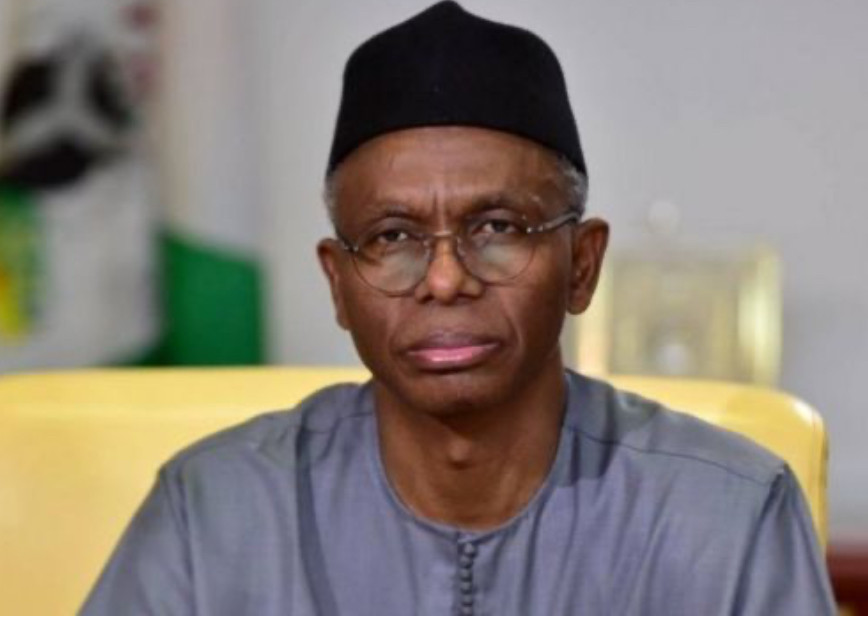
The decision made by Justice R.M. Aikawa of the Federal High Court in Kaduna has been overturned by the Court of Appeal, which has maintained Malam Nasir El-Rufai’s right to a fair trial. The decision was made in El-Rufai’s appeal against the Kaduna State House of Assembly (CA/K/240/2024).Muyiwa Adekeye, El-Rufai’s media adviser, revealed this on Tuesday. The Federal High Court erred, according to the appellate court, by holding the hearing on July 18, 2024, without properly providing El-Rufai with notice and by not giving him a chance to reply to the respondents’ counter-affidavit. Consequently, for lack of jurisdiction, the Court of Appeal threw aside the judgement rendered on July 30, 2024, and invalidated the proceedings of July 18, 2024.
The case has been sent back to the Federal High Court so that a new judge can hear it. In 2024, El-Rufai launched a fundamental rights enforcement lawsuit against the Kaduna State House of Assembly, alleging that it had denied him a fair hearing throughout its investigations.After first postponing the case, the trial court moved forward without him, approving the applications of the respondents but refusing him the opportunity to reply.
Through his attorney, AU Mustapha SAN, El-Rufai claimed in his appeal that the trial judge had declined to recuse himself and that the case had been illegally tried during vacation without any application.
The Court of Appeal concentrated on two issues: (i) the hearing notice was properly served, and (ii) the chance to file an additional affidavit was denied. Regarding service, the court highlighted that El-Rufai was not served and that only the parties’ contact information is legitimate for notice. Regarding the second matter, the court determined that El-Rufai was entitled to submit an additional affidavit and a legal response within five days under the Fundamental Rights (Enforcement Procedure) Rules, and the trial court lacked the authority to refuse this.
The ruling upholds the judiciary’s dedication to due process and a fair trial, especially when it comes to cases involving basic rights.